epilepsy aka seizure disorder which is a chronic neurological disorder in which groups of neurons in the brain sometimes send the wrong electrical or chemical signals and cause seizures. but having a seizure does not mean you have epilepsy! it's considered a curable disease rather than a disorder. seizures are abnormal electrical/chemical activity in the brain. excitation of neurons which is one of the responses caused by specific neurotransmitters binding to receptors on a neuron, exciation increases the probability that the neurotransmitter will be released by the neuron. it is greater than the inhibition of neurons which is the effect of one neuron upon another tending to prevent it from initiating impulses. with seizures there is often loss of consciousness and convulsions and may be preceded by an aura such as feelings of fear, change of taste and anxiety.
electrical and chemical signals of seizures. electrical signals is an imbalance of calcium and sodium, it causes hyperactivity of those neurons. with chemical signals there is an imbalance with neurotransmitters glutamate and gaba. excitatory is too high and inhibitory is too low. gaba is inhibitory and glutamate is excitatory. the imbalance of the two will induce a seizure.


antiepileptic drugs. drugs affecting voltage-gated sodium (Na) channels: phenytoin (Dilantin), carbamazepine (Tegretol) and lamotrigine (Lamictal). the drugs affecting calcium (Ca) channels: ethosuximide (Zarotin) and valproic acid (Depakene). affecting GABA activity: gabapentin (Neurontin) and pregabalin (Lyrica) which are also used for neuropathic pain, diabetic neuropathy and postherpetic neuralgia. there is one drug that is not understood how it works but it does called levetiracetam (Keppra).
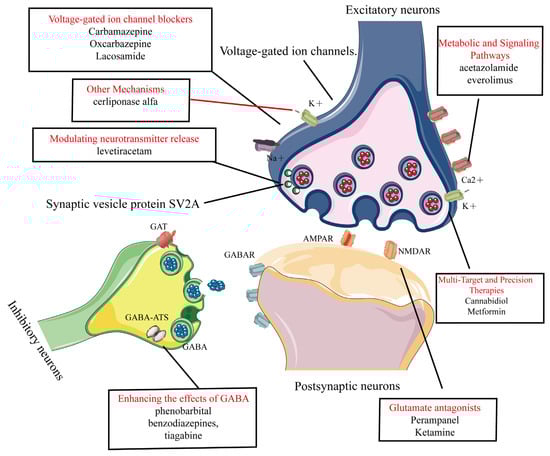
little update here! i've learned about a few more antiepileptic medications that i haven't mentioned above. first one i want to touch on is perampanel (fycompa). it's used alongside other anti-seziure meds to treat partial seziures (one side of the brain) and generalized tonc-clonic seizures which is entirely new to me! it's also referred to a grand mal seizure or GTCS. it produces bilateral and convulsive tonic and clonic muscle contractions. they are about 10% of the main seizure type for patients with epilepsy. anyway back to perampanel, it is a non-competitive AMPA glutamate receptor antagonist and is taken orally. so this drug binds to an allosteric site and not the primary glutamate binding site on the AMPA receptor. in more understandble terms instead of the drug binding to the glutamate site they instead bind someplace else. this drug is currently the one for sale. it does have some serious side effects such as drastic behavioural changes when they patients did or did not have a pasy of those behaviours. those changes included death threats, thoughts about killing and physical assualt. it's half life is about 105 hours, it's 95% bound to plasma proteins. the primary route of metabolism is of course CYP3A4 but the drug does not induce P450 enzymes.